How to Respond to Negative Reviews as a Tradesperson (Without Making Things Worse)
How to respond to bad reviews tradesperson UK customers leave starts with one rule: reply calmly, address the specific issue, and never argue in public. Get that right and a single bad review rarely does lasting damage. Get it wrong, and the reply causes more harm than the review ever did.
A one-star review feels personal, especially when you know the story behind it wasn’t as one-sided as it reads. This guide covers exactly what to write, what to avoid, and when you can ask Google to step in.
TL;DR
Reply to every negative review, calmly and without getting defensive. Acknowledge the specific issue, briefly explain what happened if it’s useful, and invite the customer to contact you directly to resolve it. Never argue, never accuse the customer of lying in public, and only report a review to Google if it clearly breaks their content policies, not just because you disagree with it.
Contents
- Why you should always reply
- How to respond to bad reviews as a tradesperson, step by step
- What to write (and what to avoid)
- A worked example
- Can you get a negative review removed?
- What if the review is fake or about the wrong business?
- FAQ
Why You Should Always Reply
Ignoring a negative review doesn’t make it disappear, it just leaves your side of the story untold. Every future customer reading that review sees only the complaint and your silence.
Research on consumer review behaviour consistently finds that most people who read reviews also read how the business responded to the negative ones, and a calm, professional reply tends to build more trust than a page of five-star reviews with no response at all. A thoughtful reply shows the reader you take feedback seriously and handle problems properly, which matters more to most people than the fact that one job didn’t go perfectly.
The reply isn’t really for the unhappy customer. In most cases, they’ve already made up their mind. It’s for the hundred other people who’ll read that review before deciding whether to call you.
How to Respond to Bad Reviews as a Tradesperson, Step by Step
- Wait before you reply. If the review has stung, give yourself an hour or two before writing anything. A reply written in frustration is the single most common cause of a bad situation getting worse.
- Thank them for the feedback. Even when it’s unfair, opening with a genuine acknowledgement rather than a denial sets the right tone immediately.
- Address the specific issue. Vague replies read as dismissive. Name the actual problem the customer raised and respond to it directly.
- Keep it short and factual. Two to four sentences is usually enough. Long, defensive replies read worse than short, professional ones.
- Move the resolution offline. Invite them to call or email you directly to sort it out, rather than trying to resolve the whole dispute in the public reply.
- Don’t edit or delete your reply later unless you’re correcting a genuine mistake. A reply that changes tone halfway through looks worse than an imperfect one left as it is.
What to Write (And What to Avoid)
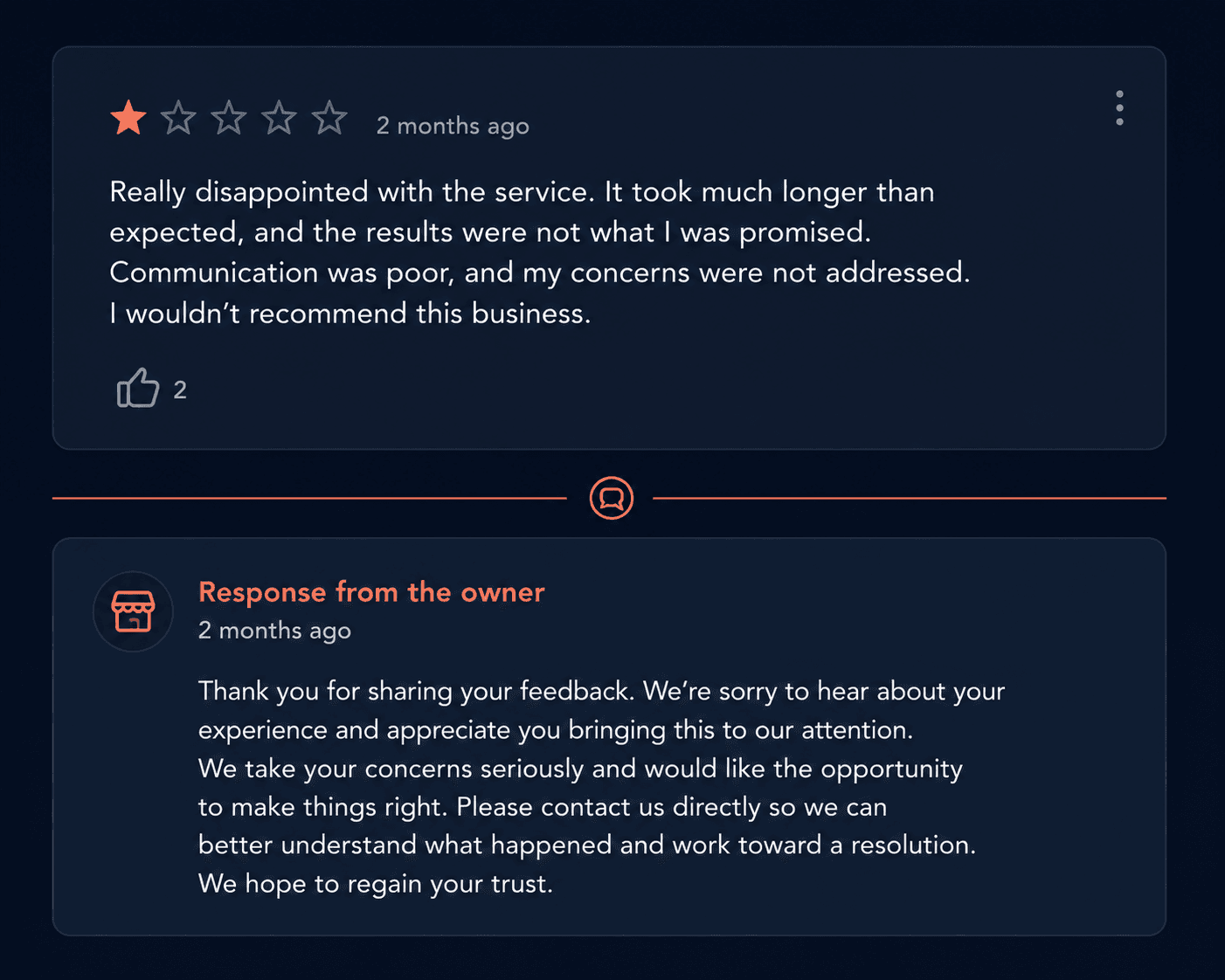
A solid reply template: “Thanks for the feedback, [name]. I’m sorry to hear the [specific issue] wasn’t right, that’s not the standard we aim for. I’d like to put it right, please give us a call on [number] so we can sort it out directly.”
Adjust it depending on the situation, but keep the structure: acknowledge, address the specific point, offer a way to resolve it directly.
Avoid these, every one of them makes the situation worse in front of anyone else reading it:
- Arguing about what actually happened
- Calling the customer a liar, even if you believe they are
- Getting sarcastic or passive-aggressive
- Sharing private details about the customer or the job in public
- Writing a long, defensive essay justifying every decision you made
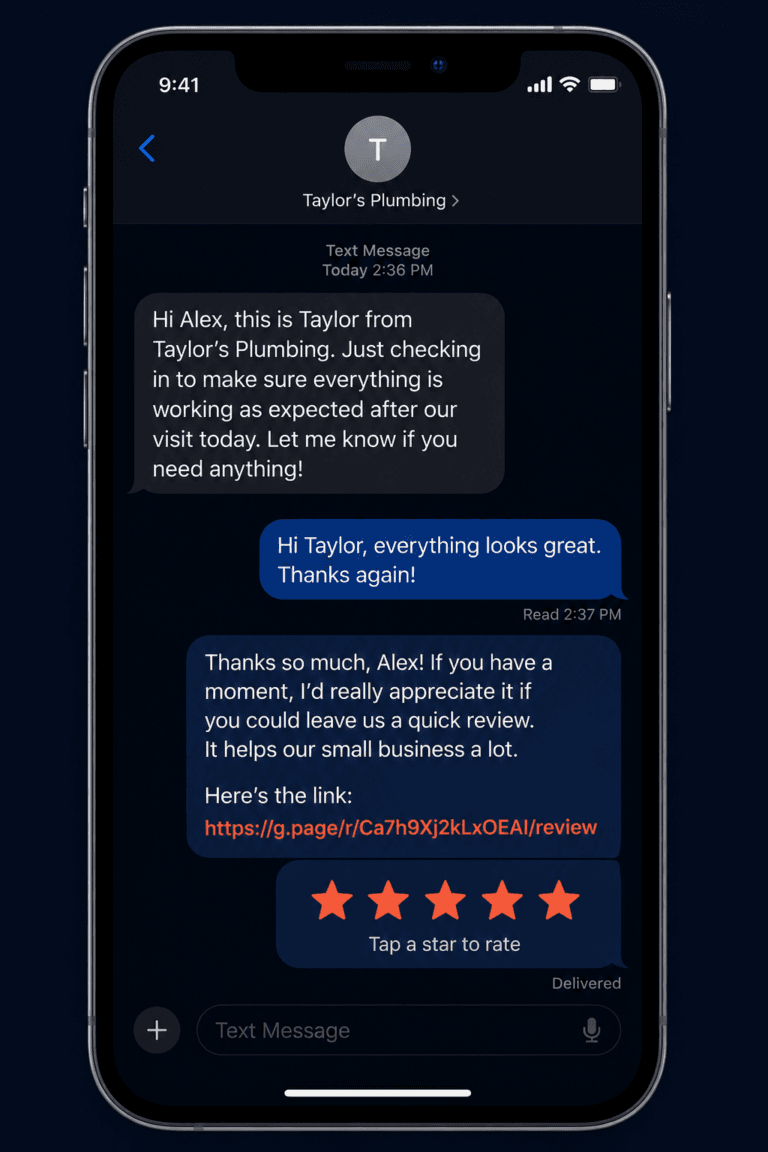
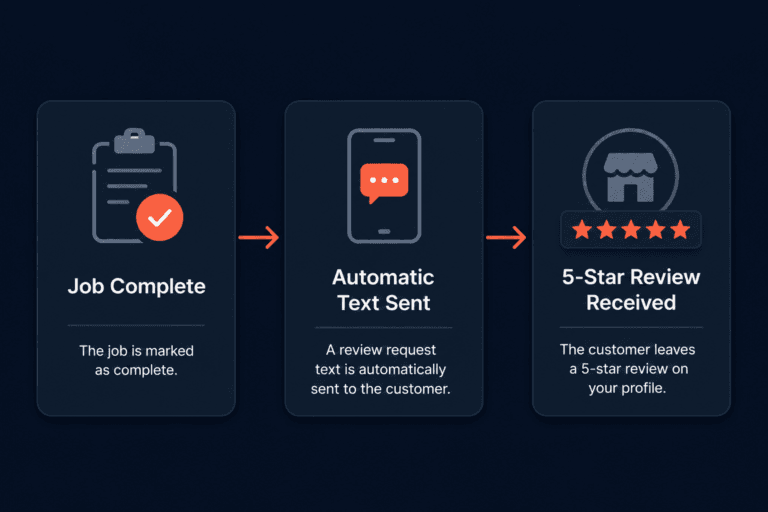
If you want to reduce how often you’re dealing with negative reviews in the first place, asking every customer for a review the right way means your happy customers are properly represented too, not just the rare unhappy one who was motivated enough to leave feedback unprompted.
A Worked Example
Say a customer leaves a one-star review complaining you turned up two hours late for a boiler repair and didn’t warn them. A weak reply argues the toss: “We called ahead, you must have missed it, and traffic isn’t our fault.” That reply tells every future reader you don’t take responsibility.
A stronger reply looks like this: “Sorry about the wait, [name], that’s not good enough and I understand the frustration. We had a call-out overrun that morning and should have kept you better informed. Please get in touch on [number], happy to discuss.” It acknowledges the issue, takes some ownership without a lengthy excuse, and moves things offline.
The difference isn’t whether you were technically in the right. It’s whether the reply makes you look like someone who handles problems well or someone who argues with customers in public.
Can You Get a Negative Review Removed?
Sometimes, but only in specific circumstances. Google will only remove a review if it breaks their content policies, not simply because it’s negative or you disagree with it.
Valid grounds for reporting a review include: it contains no genuine customer experience, it’s spam or posted by a competitor, it contains hate speech or personal attacks unrelated to the service, or it’s clearly about a different business.
An honest one-star review from a real customer who had a genuinely bad experience, even one you feel is unfair or exaggerated, will not be removed just because you ask. In that situation, a calm, well-written reply does more good than a removal request that Google will likely reject anyway.
What If the Review Is Fake or About the Wrong Business?
If you’re confident a review is fake, from someone who was never a customer, or clearly meant for a different business, report it through your Google Business Profile. Go to the review, click the three-dot menu, and select “Flag as inappropriate.”
Google’s review team assesses flagged reviews against their policies, and removal isn’t guaranteed even for genuinely fake ones. It can take anywhere from a few days to a few weeks. While you wait, a brief, calm public reply, such as “We don’t have a record of this job, please contact us directly so we can look into it,” gives other readers useful context without escalating anything.
FAQ
How do I respond to a bad Google review?
Reply calmly, thank the customer for the feedback, address the specific issue they raised, and invite them to contact you directly to resolve it. Keep the reply short and factual, and avoid arguing or getting defensive in public.
Can I remove a negative review?
Only if it breaks Google’s content policies, for example if it’s fake, spam, or unrelated to a genuine customer experience. Google won’t remove a review simply because it’s negative or you disagree with the customer’s account.
Should I reply to negative reviews?
Yes, always. A calm, professional reply is often read by far more people than the original review, and it shows future customers that you take problems seriously and deal with them properly.
What if the negative review is about the wrong business?
Report it through your Google Business Profile by flagging it as inappropriate. While you wait for Google to review the report, a brief public reply noting you have no record of the job gives context to anyone reading it.
Should I offer a refund in my public reply?
No, keep specific resolutions like refunds or free remedial work out of the public reply. Invite the customer to contact you directly, then handle the details of any resolution privately.
Will one bad review ruin my star rating?
Rarely, if your overall review count is healthy. A single one-star review among forty positive ones barely moves your average, and a calm, professional reply often reassures readers more than a spotless five-star profile with no visible problem-solving. The businesses most damaged by a bad review are the ones with very few reviews overall, where one negative comment carries disproportionate weight.
The Bottom Line
Knowing how to respond to bad reviews tradesperson UK customers leave comes down to staying calm, addressing the actual issue, and taking the resolution offline. Do that consistently and one bad review among many good ones rarely costs you the business it might seem to threaten.
If you want to see how your current review count and rating compare to the businesses ranking above you, I offer a free Local Visibility Report that shows you exactly where the gap is.
Ready to see how visible your business actually is?
Get your free Local Visibility Report at neonlobster.ai/local-visibility-report/ and I’ll show you where you stand and what it would take to improve it.
From Gigi, The Neon Lobster
Want to know exactly where you stand in local search?
We’ll scan your Google Business Profile, your reviews, and your map pack visibility. Then we’ll send you a personalised Local Visibility Report showing what’s working, what’s missing, and what it’s quietly costing you each month. It’s free, it takes two minutes to fill in, and you’ll have your report the same day.
Get My Free Local Visibility Report →No sales call. No obligation. Just honest numbers about where you stand online.