How to Optimise Your Google Business Profile to Rank in the Local Pack
To optimise your Google Business Profile as a tradesperson, you need to signal to Google that your listing is relevant, active, and trustworthy, and you do that through a combination of completeness, reviews, photos, and regular activity. This guide covers every optimisation that matters, in order of impact, so you know exactly where to spend your time.
If you haven’t set up your profile yet, start with our step-by-step setup guide. If you want a reminder of why this matters, here’s what a Google Business Profile is and why every tradesperson needs one.
TL;DR:
Rank in the Local Pack by completing every section of your profile, choosing the right primary category, collecting Google reviews consistently, uploading photos of your work, posting regular updates, and keeping your business information identical everywhere it appears online. None of this costs anything. All of it compounds over time.
Contents
- What “optimising” your GBP actually means
- The three factors Google uses to rank local listings
- Complete every section of your profile
- Choose the right primary and secondary categories
- Build your reviews consistently
- Add photos of completed work
- Post regular updates
- Use the Services section properly
- Keep your business information consistent everywhere
- How long does it take to rank in the Local Pack?
- FAQ
What “Optimising” Your GBP Actually Means
Optimising your Google Business Profile doesn’t mean gaming the system or finding loopholes. It means making your profile as complete, accurate, and active as possible so Google has the information it needs to show you to the right customers.
Google wants to surface businesses that are genuinely useful to the person searching. A fully optimised profile tells Google: this business is real, it’s active, it covers this area, it does this work, and customers trust it. The more signals you send, the more Google rewards you with visibility.
The good news is that most tradespeople have half-built profiles. A few hours of work puts you ahead of a significant proportion of your local competition.
The Three Factors Google Uses to Rank Local Listings
Google uses three main factors to decide who appears in the Local Pack:
Relevance is how well your listing matches what someone searched for. A plumber searching for “boiler installation near me” should see a plumber who lists boiler installation as a service, not a general contractor who happens to be nearby.
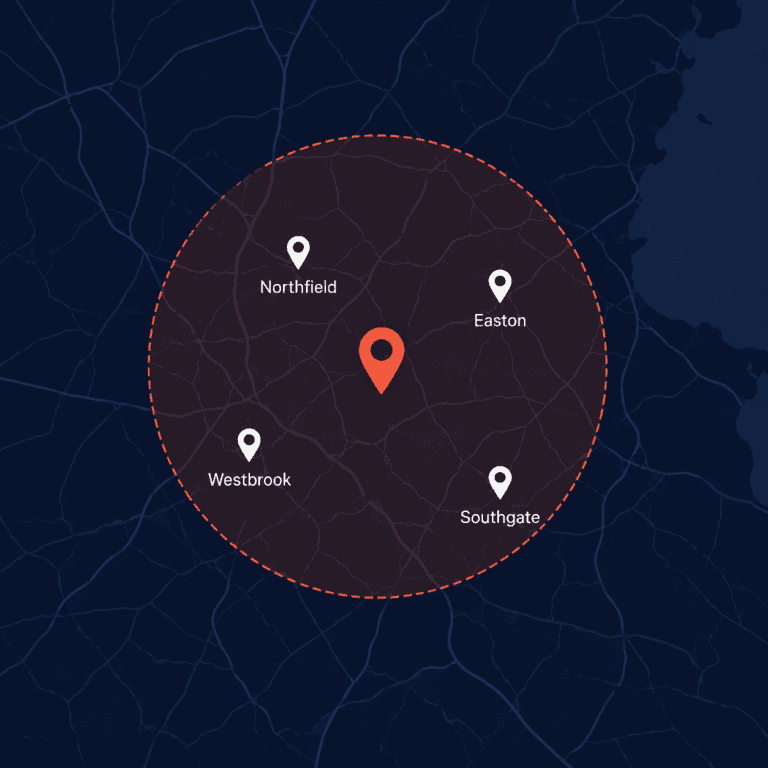
Distance is how close your business is to the person searching. This is the one factor you can’t directly control. Google calculates it automatically based on your service area and the searcher’s location.
Prominence is how well-established and trusted your business appears to Google. Reviews, the completeness of your profile, how recently you’ve updated it, and how consistent your business information is across the web all feed into this.
You can’t change your distance. Everything else in this guide is about improving your relevance and prominence.
Complete Every Section of Your Profile
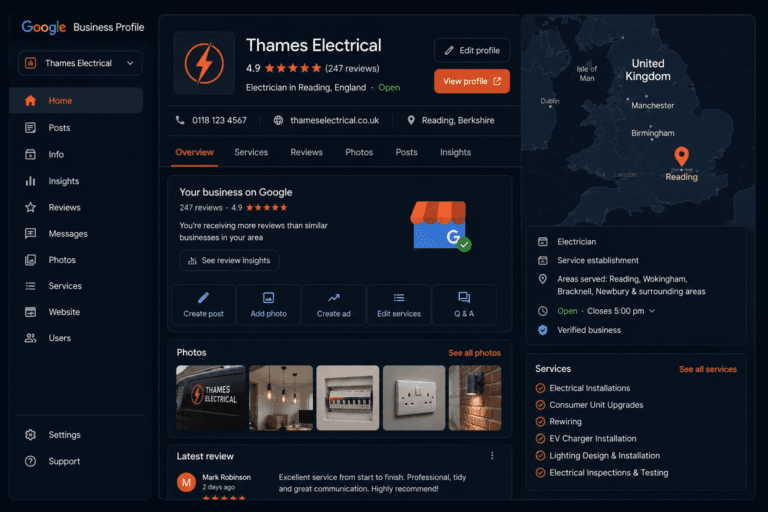
An incomplete profile is a missed ranking signal. Google uses every field you fill in to understand what your business does and where it operates. An empty section is an opportunity handed to a competitor.
Work through your profile and fill in everything:
- Business name (your actual trading name, nothing added)
- Primary and secondary categories (more on this below)
- Service area (every town and postcode you genuinely cover)
- Phone number (the one you answer)
- Website (if you have one)
- Opening hours (including whether you take emergency call-outs)
- Business description (750 characters, plain language, no keyword stuffing)
- Services (every individual service you offer)
- Photos (at least ten to start)
If you’ve skipped any of these, go back and fill them in before anything else. Completeness is the foundation everything else sits on.
Choose the Right Primary and Secondary Categories
Your primary category is the single most important field in your entire profile. It tells Google what your business fundamentally is, and it determines which core searches you’re eligible to appear in.
Be as specific as possible. “Gas Engineer” outperforms “Plumber” for gas-related searches. “Electrician” outperforms “Contractor”. If your trade has a specific category available, use it rather than a broad one.
For a full breakdown of which categories work best for each trade, see our guide to Google Business Profile categories for UK tradespeople.
Once your primary category is set, add secondary categories to cover the other services you offer. A heating engineer might set “Gas Engineer” as primary and add “Boiler Supplier”, “Central Heating Service” and “Plumber” as secondary. This widens the range of searches you can appear in without diluting your main category.
Don’t add categories that don’t apply to you. Google cross-references your categories against your reviews and website content. Irrelevant categories don’t help and can create inconsistency.
Build Your Reviews Consistently
Reviews are the highest-impact optimisation available to you, and they compound over time in a way nothing else does.
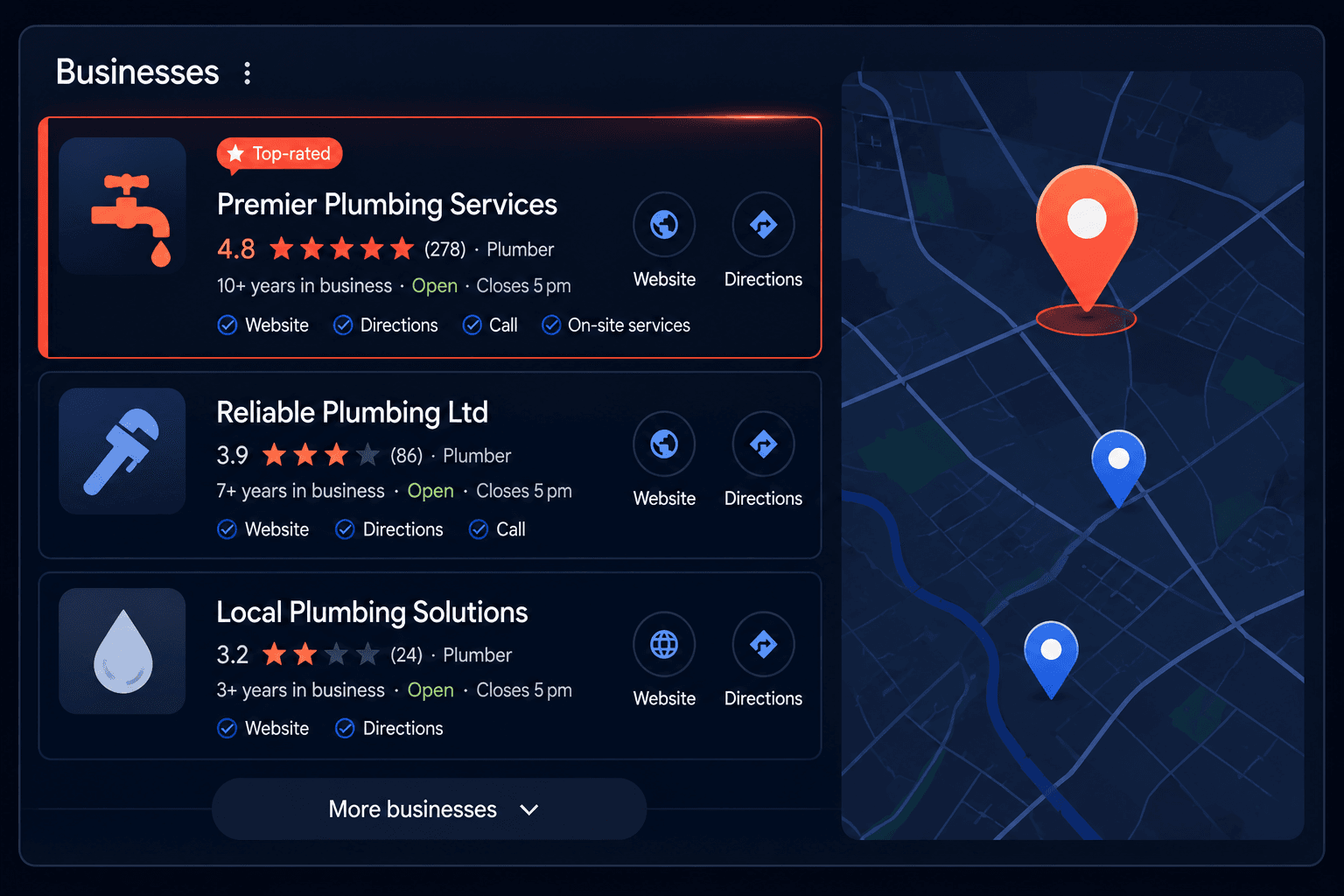
Google uses review count, star rating, and recency as prominent signals. A business with 80 reviews collected over two years consistently outranks a business with 10 reviews collected last month. Volume and consistency both matter.
The simplest system: after every completed job, text the customer a direct link to your Google review page. Don’t email, don’t ask in passing on site. A text with a direct link gets a far higher response rate than anything else.
Your star rating matters too. Anything below 4.0 is a significant barrier. Most customers won’t call a tradesperson with under 4 stars when alternatives with 4.5 or above are available. If you have a low rating, the only way to improve it is to get more reviews from satisfied customers. You can’t delete or hide existing ones.
For a full guide to building reviews consistently, including word-for-word scripts for asking, see our post on how to ask customers for Google reviews without feeling awkward.
Add Photos of Completed Work
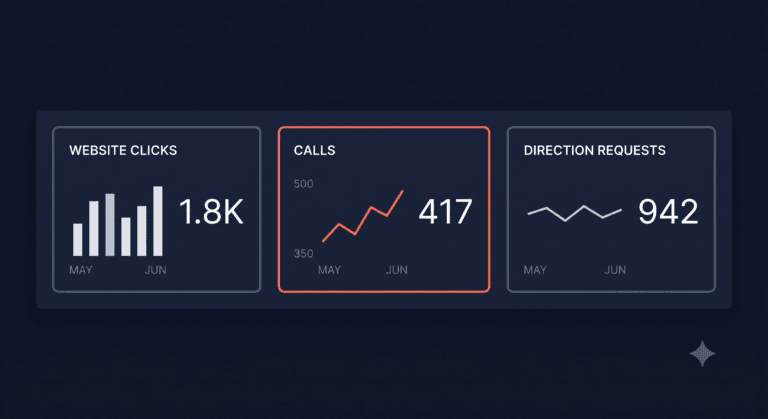
Profiles with photos get significantly more views and clicks than those without. Google’s own data shows that businesses with photos receive 42% more requests for directions and 35% more website clicks than businesses without them.
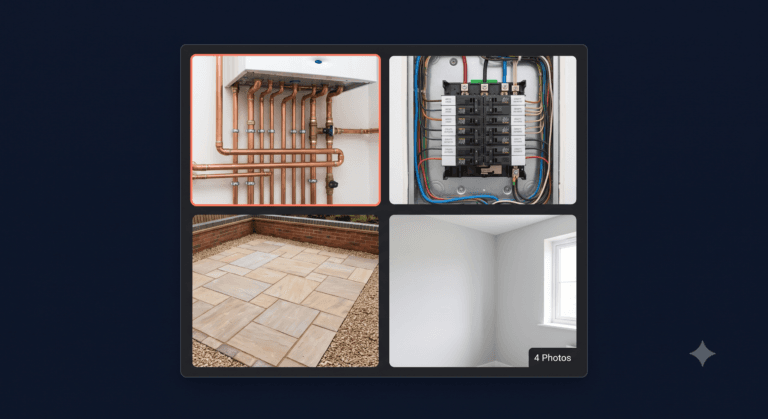
Upload photos of:
- Completed jobs (before and after where relevant)
- Your van or vehicles
- Tools and equipment
- Your team at work
Aim for at least ten photos when you first set up, and add new ones regularly. Google treats recent photo activity as a signal that your business is active. A profile with photos last updated two years ago looks dormant compared to one updated last week.
Use real photos from your phone, not stock images. Google can detect stock photography, and customers find real job photos far more persuasive than generic images.
Post Regular Updates
Google Business Profile posts work like short social media updates, visible on your listing in search results and on Maps. They disappear after seven days, which means you need to post at least weekly to maintain a live feed.
Post about:
- Recently completed jobs (with a photo)
- Seasonal services (boiler servicing ahead of winter, for example)
- Any offers or promotions you’re running
- Useful tips for local homeowners
Posting regularly tells Google your profile is active and maintained, which feeds into your prominence score. It also gives customers something to look at when they land on your profile, which builds confidence before they call.
You don’t need to write much. A photo, a sentence about the job, and your location is enough.
Use the Services Section Properly
The Services section is where you list every specific thing you do. This is separate from your categories and it’s frequently ignored, which is a mistake.
Where your primary category tells Google you’re a plumber, your services tell Google you do boiler installation, power flushing, leak detection, bathroom fitting, and unblocking drains. Each service you add is another search term Google can match you against.
Go through your services section and add every job type you regularly take on. Use the names customers actually search for, not internal trade terminology. “Boiler service” is more useful than “annual gas safety inspection”. Both are valid, but the first is what a homeowner types into Google.
Keep Your Business Information Consistent Everywhere
NAP consistency (Name, Address, Phone) refers to how consistently your business name, address, and phone number appear across every online directory, website, and listing. Google cross-references these sources to verify your business details. Inconsistencies create doubt and reduce your prominence score.
Check that your business name, phone number, and address (or service area) are identical on:
- Your Google Business Profile
- Your website
- Checkatrade, Trustpilot, Yell, and any other directories you’re listed on
- Companies House, if applicable
Even small variations matter. “J. Smith Plumbing Ltd” and “J Smith Plumbing” are inconsistent. “07700 900000” and “07700900000” are technically different formats. Standardise everything to match your Google Business Profile exactly.
How Long Does It Take to Rank in the Local Pack?
Most tradespeople see meaningful movement within two to three months of fully optimising their profile and starting to collect reviews consistently.
The first month is mostly setup and signals. The second month, Google starts to trust the listing more. By the third month, you’re typically appearing for more searches and getting more profile views, even if you’re not yet in the top three.
Breaking into the top three for competitive searches in a busy area takes longer, often four to six months of consistent activity. But you don’t need to be in the top three to benefit. Appearing at all, with a complete profile and good reviews, puts you in front of customers who click through to see more.
The tradespeople who rank well didn’t get there overnight. They built it consistently, month after month, and now the system runs whether they’re busy or not.
FAQ
How do I rank higher on Google Maps?
Focus on the factors Google can measure: complete your profile fully, build Google reviews consistently, add photos regularly, post weekly updates, and keep your business information identical across every directory and website. Distance is the one factor you can’t control. Everything else is within your reach.
What factors affect Google Maps ranking?
Google uses three main factors: relevance (how well your listing matches the search), distance (how close you are to the searcher), and prominence (how trusted and active your listing appears). Prominence is built through reviews, profile completeness, consistent business information, and regular activity.
How do I appear in the Local Pack?
You need a verified Google Business Profile with your correct service area set, a complete profile, and at least some Google reviews. A bare-minimum profile can appear in the Local Pack, but it won’t hold a top-three position without consistent optimisation over time.
How many Google reviews do I need to rank?
There’s no fixed number. What matters is having more recent, relevant reviews than your immediate competitors. In a less competitive area, ten solid reviews might be enough to rank. In a busy city, you may need fifty or more. Check who’s currently ranking in your area and use their review count as your target.
Does adding photos help my Google Business Profile ranking?
Yes. Google treats photo activity as a signal of an active, maintained business. Profiles with photos also get significantly more engagement from customers who find them, which feeds back into your prominence score. Aim for at least ten photos to start, and add new ones regularly.
How often should I post on my Google Business Profile?
At least once a week. Posts expire after seven days, so a gap in posting leaves your feed empty. A photo from a recent job with a brief description is enough. Consistency matters more than the quality of any individual post.
What is NAP consistency and why does it matter?
NAP stands for Name, Address, Phone. Keeping these identical across every online listing helps Google verify your business details and builds trust in your prominence score. Inconsistencies across directories, your website, and your Google profile create doubt and can hold your ranking back.
The Bottom Line
Optimising your Google Business Profile is the highest-return activity in local SEO for tradespeople. It’s free, it builds over time, and once the signals are in place they keep working whether you’re on a job or not.
Complete the profile, get the reviews coming in consistently, add photos, and post regularly. That’s the system. It’s not complicated. It just needs to be done.
If you want to know how your profile stacks up right now against the businesses ranking above you, I offer a free Local Visibility Report that shows exactly where the gaps are.
From Gigi, The Neon Lobster
Want to know exactly where you stand in local search?
We’ll scan your Google Business Profile, your reviews, and your map pack visibility. Then we’ll send you a personalised Local Visibility Report showing what’s working, what’s missing, and what it’s quietly costing you each month. It’s free, it takes two minutes to fill in, and you’ll have your report the same day.
Get My Free Local Visibility Report →No sales call. No obligation. Just honest numbers about where you stand online.